

Turning a Regular Photo Gallery into a Highly Engaging, Visually Guided Tour
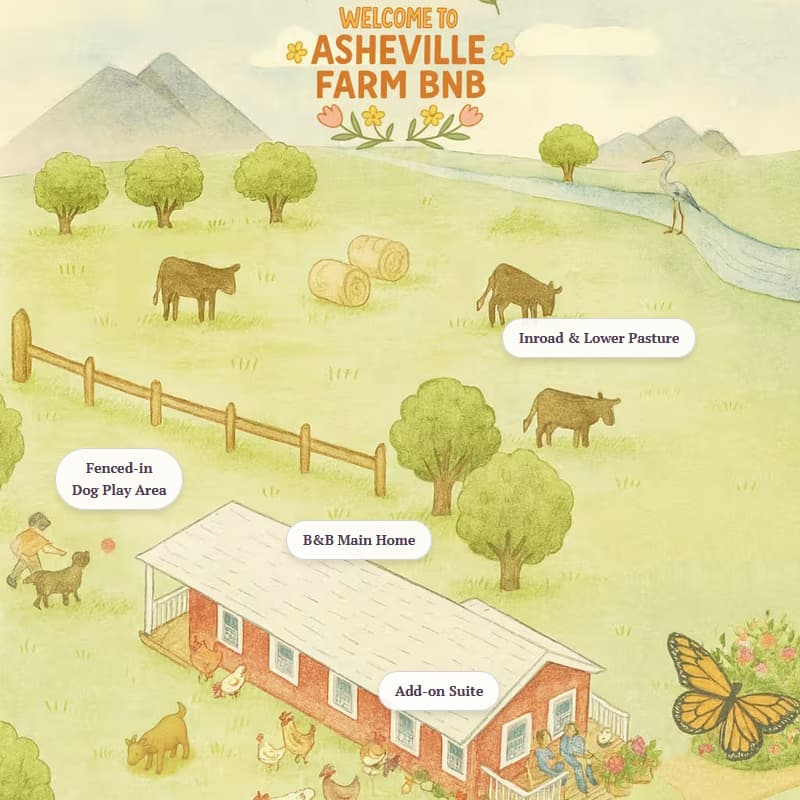
Above: Screenshot of the live interactive property map. The navigation bubbles are disabled here but are clickable on the B&B's website.
Many small business websites rely on static photo galleries -- pages that visitors often quickly skim and forget.
In this case study, we show how an illustrated, interactive map transformed a traditional gallery into a Visual Guided Tour. This increases engagement and helps visitors understand and experience the space before they ever arrive. It's an example of how visual storytelling can transform a simple photo gallery into an immersive online experience.
Below, we walk you through our design process, lessons learned, and how small businesses can apply the same approach.
To see the actual Visual Guided Tour in action, visit https://www.ashevillefarmstay.com/farm-photo-gallery.php
February 10, 2026 • 7 min read
Why Traditional Photo Galleries Fall Short
Most photo galleries ask visitors to do all the work: Click, scroll, guess what you're looking at, and try to figure out how one image relates to another.
For destination-based businesses (lodging properties, restaurants, retreats, parks, event venues, and museums), this traditional photo gallery layout misses a huge opportunity. Visitors don't want just photos -- they want to envision themselves being there. So when redesigning the Asheville Farm B&B website, we asked a simple question: how can we build excitement and anticipation before a guest ever arrives?
What if a photo gallery felt less like a grid of images and more like a guided walk through the property?
The result was a new type of page that we call a Visual Guided Tour: an illustrated property map paired with descriptive storytelling and organized photo sections. This combination helps visitors actually experience the space, step-by-step.
The Design Goal: Create a Sense of Arrival Before the Guest Arrives
In an earlier article, we explored how sensory and immersive website design helps visitors connect emotionally with a place, service, or product before they ever book or buy.
Many small business websites try to achieve this with a photo gallery, but traditional grid-based layouts rarely create the kind of emotional connection that inspires action.
Video can be a stronger option -- a short clip can convey atmosphere, movement, and mood in ways static photos can't. But it also requires visitors to sit, watch, and wait for the information they're looking for.
For the Asheville Farm Stay B&B, we chose a different path. A Visual Guided Tour felt like the perfect solution. By combining an illustrated map, narrative descriptions, and context-rich photography, we transformed a static gallery into an engaging, guided experience. This form of visual storytelling that helps visitors imagine themselves moving through the property.
This tour mirrors the natural progression of a farm-stay visit:
- Guests arrive along a quiet inroad with mountain foothills in the distance.
- They pass open pastures filled with animals and wildlife.
- They approach the barn-red farmhouse, framed by a giant magnolia tree and pots of fresh, blooming flowers.
- They gradually discover new views, spaces to explore, and experiences throughout their stay.
Instead of presenting visitors with a disconnected assortment of thumbnails or a time-consuming video, we developed a visual map that becomes the navigation itself.
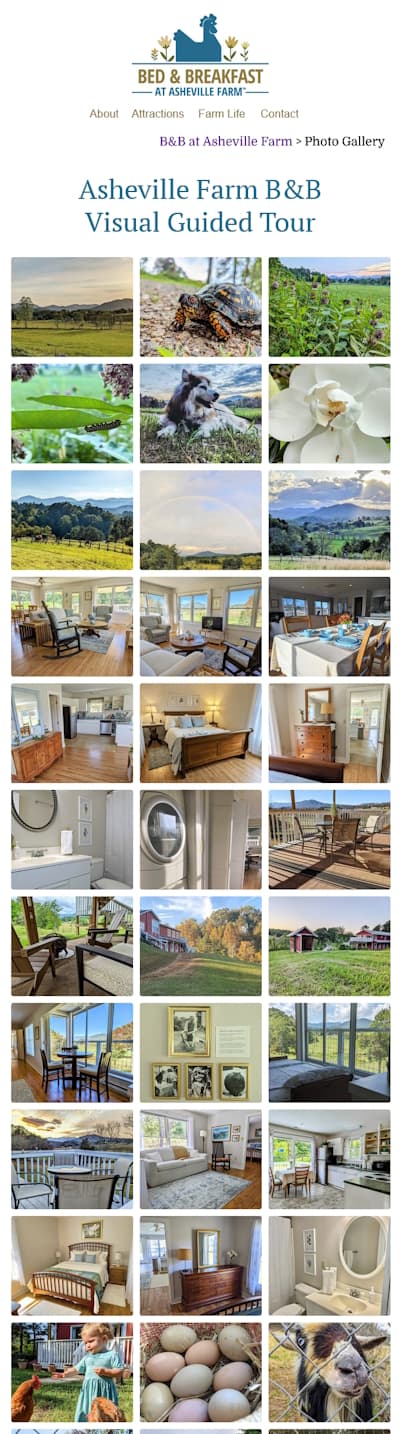
A traditional, grid-based photo gallery asks a lot of visitors. They must figure out how the photos all fit together to add value to the final product -- in this case, the vacation stay.
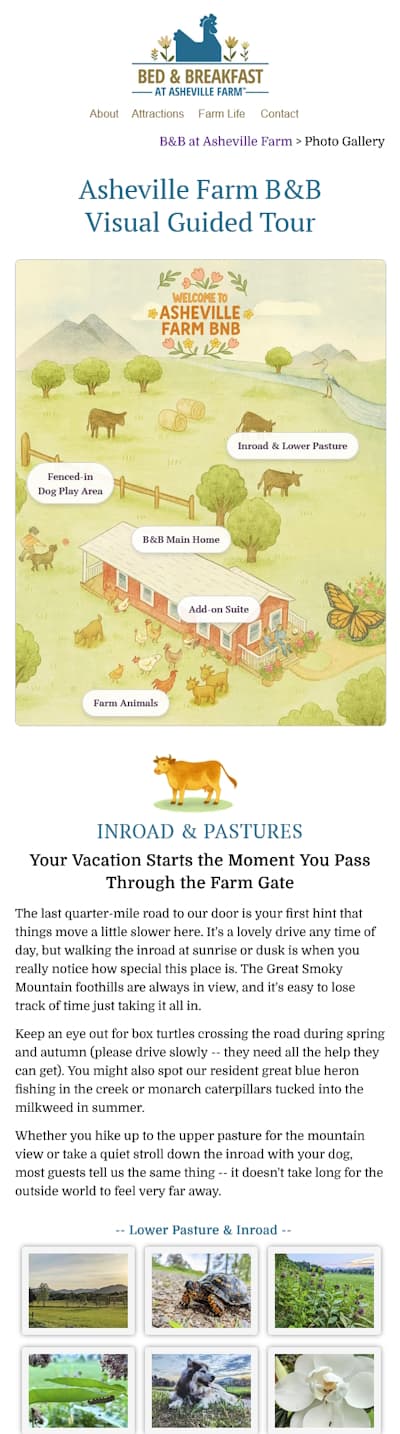
A Visual Guided Tour provides a more cohesive delivery method. It leads guests step-by-step through the experiences they can expect on their visit.
Want to explore the live page while reading?
https://www.ashevillefarmstay.com/farm-photo-gallery.php
The Core Structure of Our Visual Guided Tour
This layout combines three simple ideas that any small business can adapt.1. An Illustrated Overview Map
Rather than a satellite image or technical blueprint, we created a stylized aerial illustration. It immediately sets the tone and helps visitors understand the layout at a glance.
Clickable map icons allow visitors to jump directly to:
- Inroad & Pastures
- Main Home
- Guest Suite
- Dog Play Area
- Farm Animals
The map acts as both an orientation tool and a storytelling device.
Transparency note: The illustration began as hand-drawn sketches created during our planning process. We then used AI tools to expand and refine the final rendering. The design direction and storytelling were entirely human-driven -- the technology simply helped bring the concept to life more efficiently.
2. Anchored Narrative Sections
Each section represents a real, physical area -- not just a category of photos. Instead of generic labels like "Nature" or "Rooms," sections describe real experiences:
- The drive into the property
- Morning pasture walks
- Indoor gathering spaces
- Encounters with animals
Visitors feel like they're moving through a place rather than browsing a database.
3. Context-Rich Photography
As visitors expand the images, each is paired with simple narrative descriptions that focus on what guests actually notice:
- box turtles crossing the farm road
- misty mountain views at sunrise
- goats greeting visitors at the gate
The goal shifts from "look at these pictures" to "imagine yourself here."
Why This Map-Based Visual Storytelling Format Works
It guides the visitor experience
Instead of hoping visitors connect the dots, we help them understand how the property is laid out and what to expect.
It increases engagement
Instead of disconnected photos, the page becomes a series of visual stories that guide visitors through the property. As a result, they tend to stay on the page longer and explore more sections.
It supports SEO naturally
Each section becomes a meaningful anchor tied to real experiences. This encourages richer descriptive copy and more natural keyword usage. This not only improves the visitor experience -- it drives high search engine rankings.
It builds emotional connection
Visitors can picture themselves moving through the farm and home -- a powerful step toward booking or making contact.
Applications Beyond Hospitality
After launching the page, we realized this approach applies far beyond hospitality.
Restaurants- regional maps connecting dishes to origins
- brewing or roasting process tours
- ingredient sourcing journeys
- resorts
- botanical gardens
- historic districts
- national parks
- cultural walking tours
- school campuses
- nature centers
- historical exhibits
- wedding properties
- music festivals
- retreat centers
- art collectives (RAD)
- exhibit navigation
- artisan markets
- maker spaces
Any business where physical space plays a role can benefit from a visual guided tour.
Lessons Learned During Development
Illustration creates warmth
The illustrated map became the emotional entry point of the page. Small animated icons helped guide visitors forward.
Anchored navigation improves usability
Visitors can jump directly to areas of interest without losing context. Smaller targets (like the dog play area) are briefly highlighted using simple CSS to help users orient themselves.
Sensory storytelling outperforms feature lists
Visitors respond more strongly to descriptive, experience-focused copy than technical descriptions alone.
Subtle surprises keep the visitor engaged
To add a touch of whimsy and life, we integrated small CSS animations -- like this hen pecking in the grass. These micro-interactions act as little "refreshments" as visitors move through the page.
Performance still matters
Using responsive images, modern formats, and lazy loading ensures that we're delivering fast-loading webpages and visually enticing content.
When to Consider a Visual Guided Tour for Your Own Website
This approach works especially well if your business:
- has a physical space guests explore
- offers multi-area experiences
- relies on atmosphere or storytelling
- wants to help visitors understand the layout quickly
If your current site relies on a simple photo grid, a map-based or illustrated navigation system can dramatically improve engagement and understanding.
Here is an unrelated site that used illustration-based navigation exceptionally well:
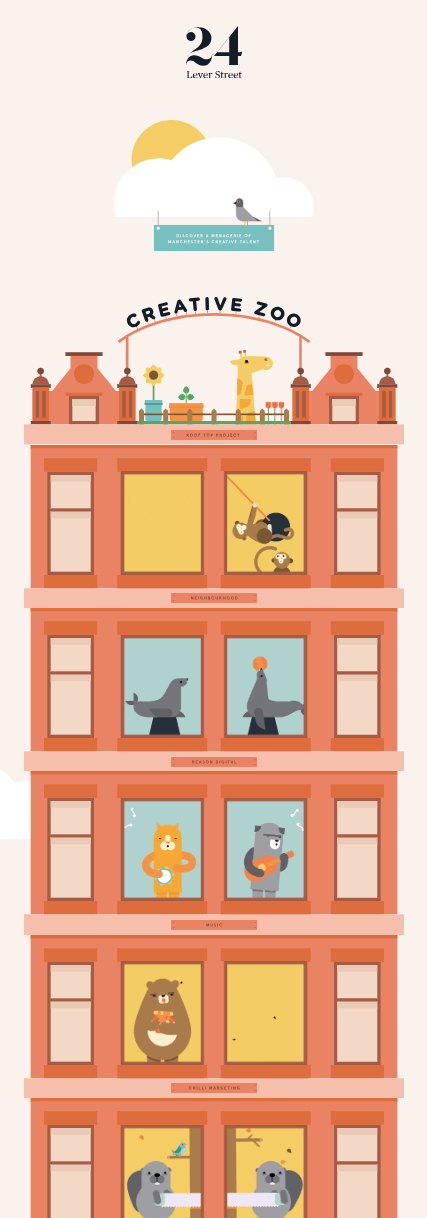
24 Lever Street
Though this design is no longer current, we believe it was a perfect fit for the collective of creative agencies located at 24 Lever Street:
- It served as a brilliant digital metaphor for the physical building and the agencies inside it.
- It encouraged visitor interaction and exploration. Clicking different windows triggered unique animations, while the company names beneath each set of windows linked to the individual agency websites.
- It immediately communicated that the agencies located there were creative, playful, and fun to work with.
- There was even an adorable mole and earthworm hidden at the bottom — an "Easter egg" surprise for visitors who scrolled through the entire page.
Closing Thoughts
What started as a simple photo gallery redesign became a new way of presenting place-based experiences online.
A Visual Guided Tour combines imagery, narrative structure, and intuitive navigation into a powerful form of visual storytelling. And in a competitive online environment, that sense of connection can make all the difference.
Curious how visual storytelling could transform your website?



 EMail:

