

The Inverted Pyramid in Action: A Real-World Writing Example
See How We Used the Four-Step Framework in a Real Article

The news used to come out once a day, so people had time to read every line. Today, the stream of information is never-ending and readers have little patience. "Is this article of interest to me?" If the answer is no, they are gone. The Inverted Pyramid approach to writing is designed to catch their attention right at the start.
 4 min read •
 Share this article
In Part 1, we introduced our four-step approach to writing with the Inverted Pyramid. Now let's see what that approach looks like in an actual finished article.
Below is the article that prompted us to develop our four-step writing shortcut. It helps us avoid writer's block, stay focused on our main subject, and avoid never-ending rewrites.
We've marked the major sections of the article so you can see how context, the main idea, supporting information, and the final takeaway work together to create a concise, easy-to-scan story.
The following article demonstrates the 4 steps of the Inverted Pyramid writing approach. It 1) defines the situation, 2) reveals the result, and then 3) dedicates most of its story to explaining how we reached that conclusion. 4) Finally, it reveals the larger takeaway message.
CONTEXT
First, Give the Reader Enough Background to Care
The opening and challenge are separated in this article breakdown. Often, however, they can be combined to establish the circumstances that led to the main idea, without making the reader wait for the important part.
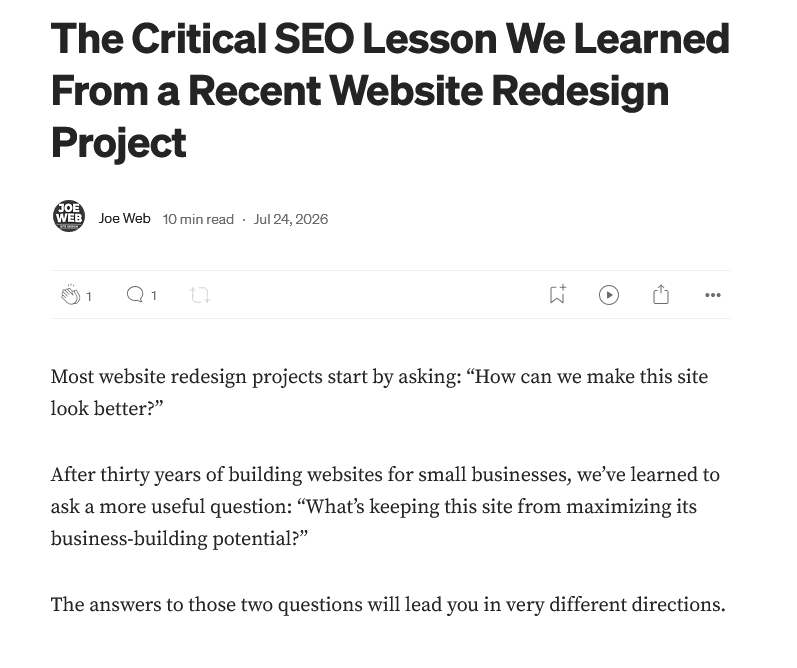
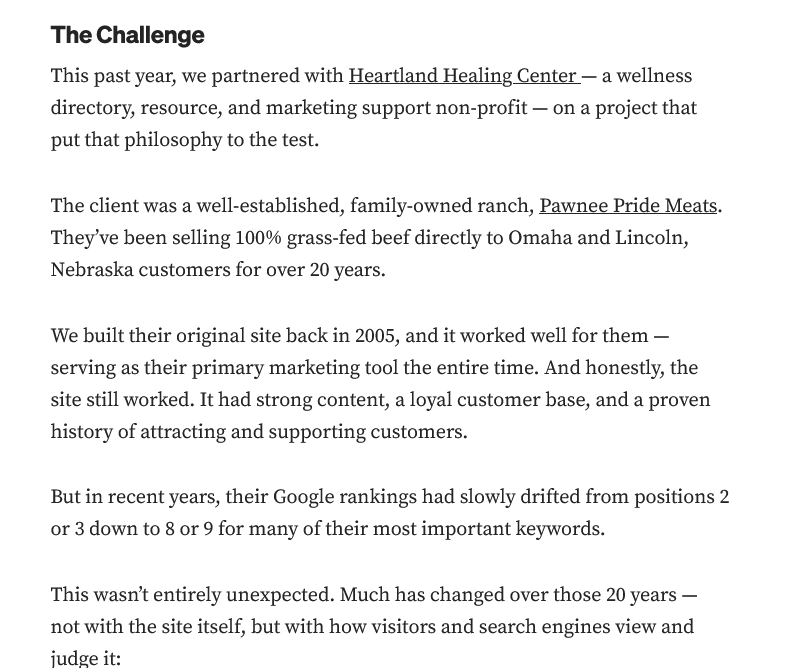
The opening context in this post about our website redesign outcome: we explain how helping our small business clients achieve top of the organic search listings is often a primary goal.
We accomplished that. But something far more significant and unexpected happened.
THE MAIN POINT
Then Reveal the Most Important Result
This is the payoff. The reader now knows why the story matters before we ask them to read through the details of how we got there.
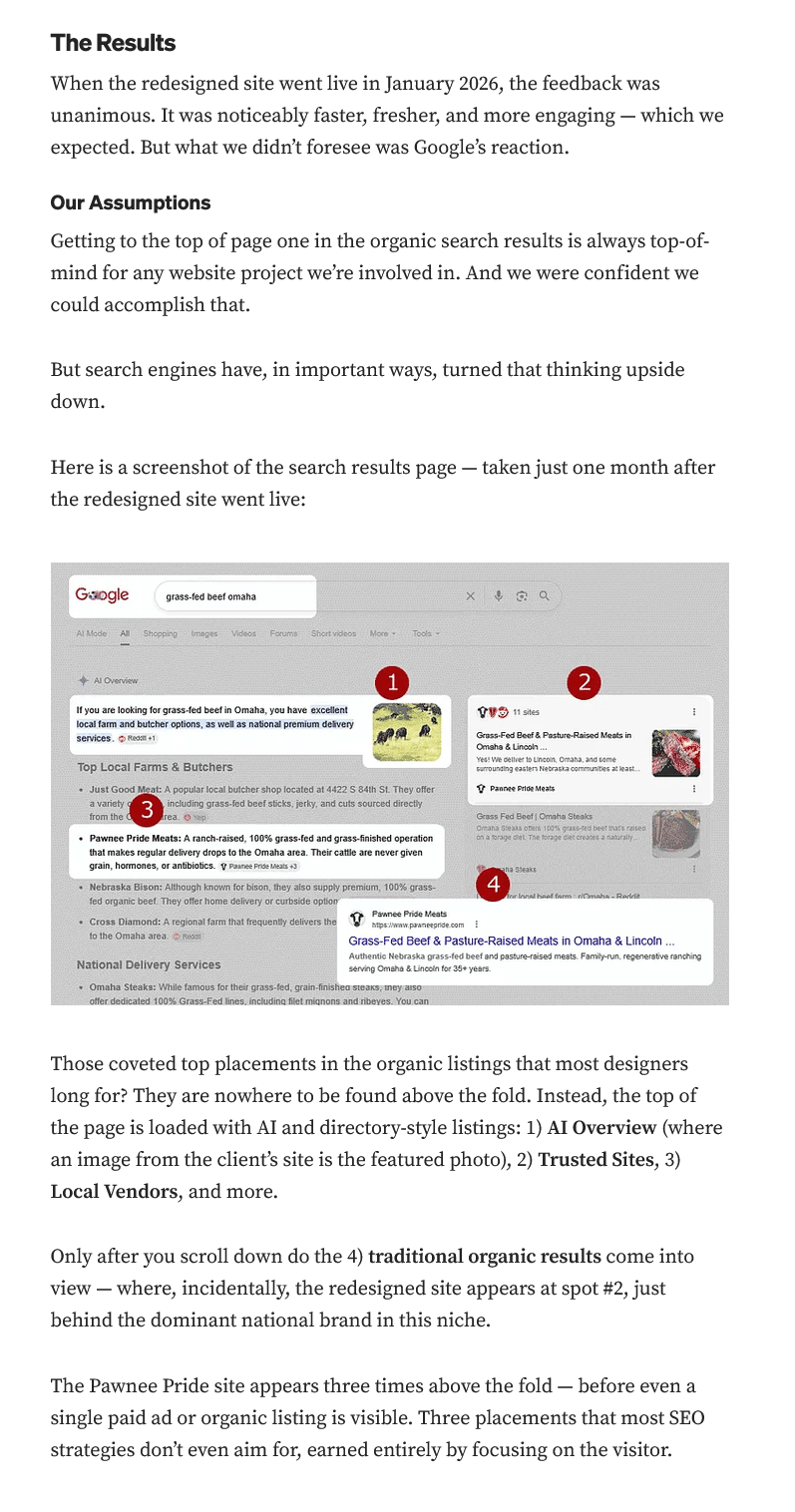
Our main point in this post: Google's new AI sections have changed SEO dramatically.
We illustrate that change with our client's results: the site was displayed three times at the top of the page, well before the organic search results. In all, our client had four opportunities near the top of the page to be selected by shoppers.
THE SUPPORT
Then Show the Reader How You Got There
This is where most of the article lives. Evidence, examples, decisions, explanations, and supporting details give the reader confidence in the main point.
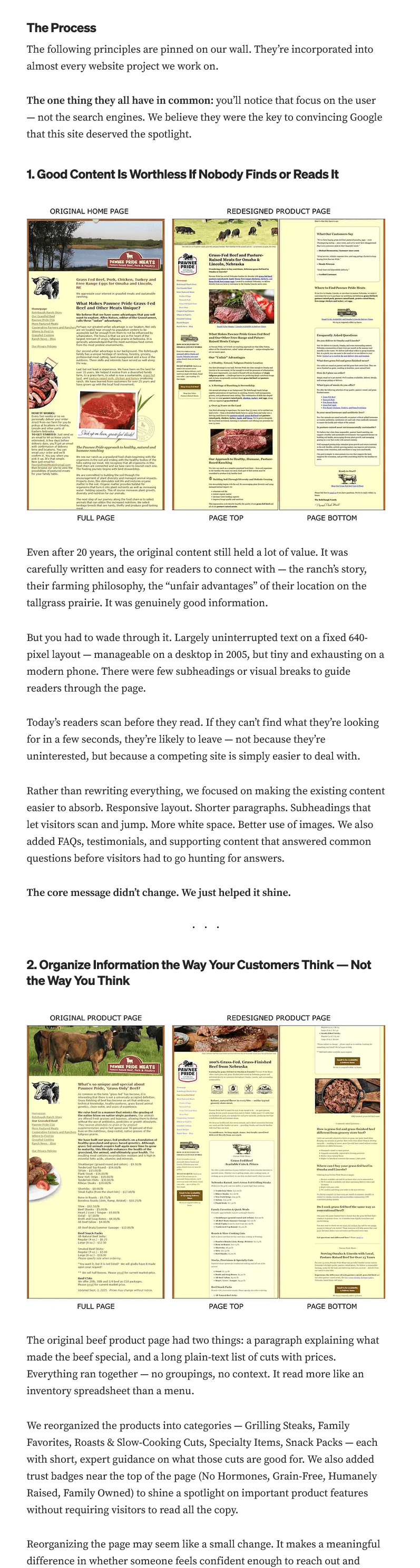
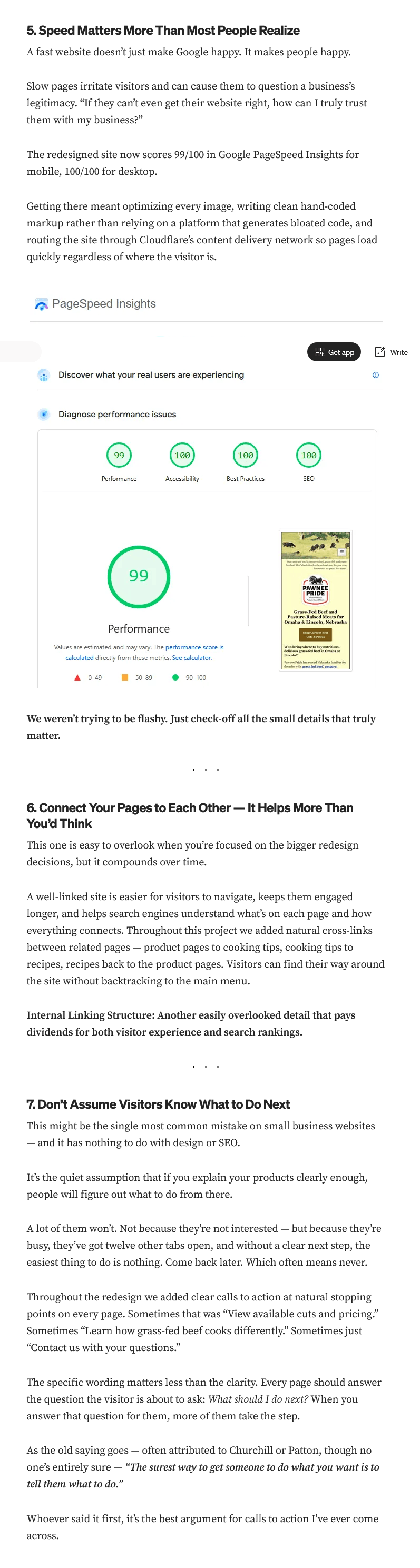
The bulk of the page now supports our main point: We explain some of the decisions and techniques we believe helped our client earn these prominent positions in the search results.
SO WHAT? THE TAKEAWAY
Finally, Bring the Reader Back to the Big Idea
The conclusion crystallizes the lesson and leaves the reader with the point we want them to remember.
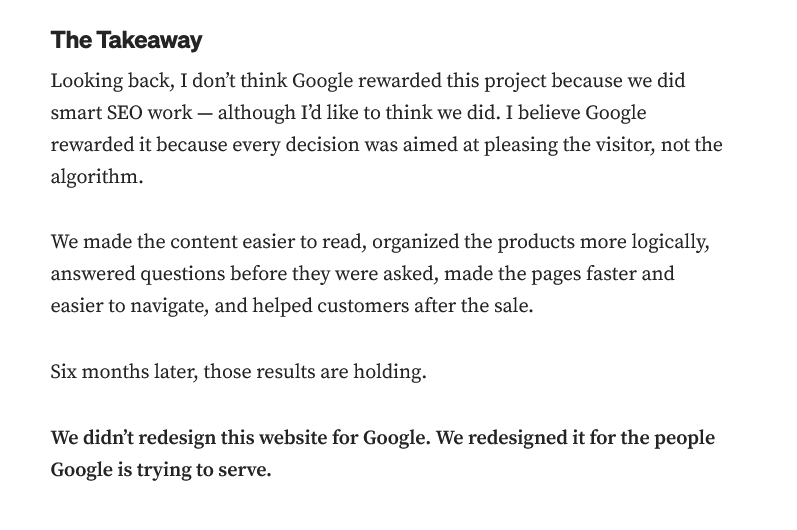
The takeaway message we want our readers to get from this post: We didn't design this website according to what we thought Google might respond to. We designed the pages with our readers in mind -- trying to make sure they find the information they need rather than bouncing out to a competing site.
Once we knew what we wanted the reader to remember, we knew where to start -- and the rest of the article had a job to do.
The Bottom Line
Whether you write often or seldom, the Inverted Pyramid approach can easily become one of the most valuable tools in your writing toolkit. It's based on knowing what matters most before you ever start writing.
Once you know the one thing you want your reader to remember, the rest of the article has a purpose: 1) Give the reader enough background to understand why it may be of interest to them. 2) State the main point. 3) Support it with useful information. 4) Then bring the story back to the takeaway.
That's what made this approach work so well for us. Instead of staring at a blank page wondering where to begin, we knew what we wanted to say first.
And once we knew what to say first, writing the rest of the article got a whole lot easier.
If you'd like to go back and see the four-step writing shortcut itself, read Part 1 of this series.
Need Help Turning Your Ideas Into Great Content?
Maybe you know what you want to say but don't have the time or interest in turning your ideas into finished articles.
Or, perhaps you're even at a loss for what might interest and move your target market.
That's where we can help.
At Joe Web site design, we build websites and create useful, interesting content for small businesses in Asheville and throughout Western North Carolina. We can help with everything from website design and local SEO to blog posts, articles, and other marketing content.
Your website should do more than simply look good. It should explain what you do, answer your customers' questions, and give them a reason to choose you.
If you're looking for a website that does that -- and a neighborly team to help you make it happen -- let's talk.
Joe Web site design
Asheville, NC
Call 828-551-9761



 EMail:

